The Fall 2011 semester is in full swing and things are as busy as you would expect them to be in grad school. I'm in two composition classes right now (one of them focuses exclusively on electronic music) as well as in a graduate-level course on modern music history and a music aesthetics class. All four keep on bringing up the same topics, the same names. Sometimes I feel like I'm a library where all this information keeps piling up and the poor internal secretary can't keep up with the filing. Days later a little snippet of knowledge will finally make sense in the bigger scheme of things. I've got a 12 inch stack of papers from this semester's readings, rough drafts and projects. It scares me every time I look at it.
I've always felt blessed in musical development. I feel like I've been led to know just the right things at just the right time as I've grown. More than ever I feel comfortable with the idea that being a composer is what I will spend the rest of my life doing.
So far this semester I've been working on three main composition projects. I'll also have three electronic music compositions by the end of the semester (the first one Assemblance, is done, it uses LEGOs as its sound source. The second one will be done by next week, composed on a retro synthesizer.)
My main project this semester is taking forever to write, a twenty minute evolution of two contrasting ideas, for a small chamber ensemble. I'm taking M.C.Escher's Metamorphosis 2 as an inspiration.
I have finished a shorter piece called Cranching which I initially wrote for a visiting percussionist to play on hammered dulcimer, but after he kinda couldn't play it, I've revised it for Carillon (bell tower).
My professor Dr. Thornock will play it today on the BYU carillon, and I'm very excited.
I've also been collaborating with a dancer to write a very moody piece called Space2 for Marimba, Vibraphone, Xylophone, Bass Clarinet and Clarinet. It will be played in concert (if I can, you know, finish it and find and rehearse performers!) next Wednesday, November 9th, and also featured in dance recitals later this semester.
More pieces loom large on the horizon, including a very untraditional piece for jazz ensemble, a solo bassoon piece, and of course, my proposed Master's Thesis project - a concerto for harp.
Tuesday, November 1, 2011

Friday, July 1, 2011
Summertime
When the living is easy...
This summer has been pretty, um, involved for me and my little family so far. I work an average of 42 hours a week between three different jobs. We're expecting our second child any day now, Scarlett Estelle. My boy, Ender (short for Elias Anders) is three years old and very fun, he's into Legos, (the little ones!) We make airplanes and spaceships. All in all, when I'm home I prefer to be with my family, and have found little time for composing. The main project that I have due this summer is a dance collaboration project I'm working on with a dancer/choreographer from BYU. I have the music for it running around in my head, I've just got to write it down. Let me set a goal to do it by the end of July.
I'll also have a daughter by then too, so we'll see how it goes!
So far this summer we have managed to do some fun things, sleeping out in our yard in a tent, visiting my family for a reunion, having a number of fun little outings, such as to the pool or up the canyon to Bridal Veil Falls, or up the mountain to look out over the city. We've also been quite diligent in our workout, going to the gym at least four mornings a week.
The plan is to greatly simplify life by fall. I am leaving one job, so that outside of campus I will only work at a music store on Saturdays. Weekdays I'll be teaching two classes on campus (two sections of dictation classes) which provides the best money I can hope to make at any job right now. I'll also have 15 hours a week at the music lab, which I can weave around my school schedule. This should free up all my evenings and in general give me more time to compose. Plus, working at the lab is more a matter of maintenance and helping people in with questions, hopefully leaving me with some time for homework. Oh, and being, you know, a composer!
So for now the summer days are long and go by quickly, weeks swimming away not in leisure but nonetheless pleasantly, without the stresses and deadlines of school.
Have I ever mentioned that I am the organist for our LDS ward? I find it very satisfying and invigorating. I'm still not exactly sure what all the stops do, so sometimes its an adventure when I chose to pull some for the last verse of a hymn...
This summer has been pretty, um, involved for me and my little family so far. I work an average of 42 hours a week between three different jobs. We're expecting our second child any day now, Scarlett Estelle. My boy, Ender (short for Elias Anders) is three years old and very fun, he's into Legos, (the little ones!) We make airplanes and spaceships. All in all, when I'm home I prefer to be with my family, and have found little time for composing. The main project that I have due this summer is a dance collaboration project I'm working on with a dancer/choreographer from BYU. I have the music for it running around in my head, I've just got to write it down. Let me set a goal to do it by the end of July.
I'll also have a daughter by then too, so we'll see how it goes!
So far this summer we have managed to do some fun things, sleeping out in our yard in a tent, visiting my family for a reunion, having a number of fun little outings, such as to the pool or up the canyon to Bridal Veil Falls, or up the mountain to look out over the city. We've also been quite diligent in our workout, going to the gym at least four mornings a week.
The plan is to greatly simplify life by fall. I am leaving one job, so that outside of campus I will only work at a music store on Saturdays. Weekdays I'll be teaching two classes on campus (two sections of dictation classes) which provides the best money I can hope to make at any job right now. I'll also have 15 hours a week at the music lab, which I can weave around my school schedule. This should free up all my evenings and in general give me more time to compose. Plus, working at the lab is more a matter of maintenance and helping people in with questions, hopefully leaving me with some time for homework. Oh, and being, you know, a composer!
So for now the summer days are long and go by quickly, weeks swimming away not in leisure but nonetheless pleasantly, without the stresses and deadlines of school.
Have I ever mentioned that I am the organist for our LDS ward? I find it very satisfying and invigorating. I'm still not exactly sure what all the stops do, so sometimes its an adventure when I chose to pull some for the last verse of a hymn...
Thursday, June 23, 2011
New LDS Musicians Blog
So, a group of us young LDS musicians are starting a new blog for that topic at http://mormonmusic.wordpress.com/
I've already contributed the second article, which in case you don't care to follow that blog, I'll re-post here:
I've already contributed the second article, which in case you don't care to follow that blog, I'll re-post here:
Monday, June 20, 2011
A Modern Boy in a Postmodern World
So what in the world kind of music do you compose when 'Modern' music refers to the early to mid twentieth century and 'Post-Modern' refers vaguely to everything since? Post-Postmodern?
This was the topic of a discussion I had recently with my peer at BYU, Joseph Sowa.
In our discussion, we worked up to a very broad and unforgiving definition of these terms for ourselves, and hypothesized about what 'the next big thing' in music is/will be. (That is to say, 'contemporary classical music' - apparently the next big thing in popular music is 'electroclash bubble-goth' and that is a discussion for another day)
 Modernism: music composed to be a self contained unit of itself, employing all the latest techniques. Its approach asks, 'How can I make this all make sense?'
Postmodernism: see the wiki. This is music composed with a sense of irony, using any available musical materials. It challenges traditional notions of music in every way it can think how. Its approach asks, "Anything goes, so what do I want?"
Joseph and I both agreed that our generation (roughly composers maturing from the 90s to the present, but also including a number of older composers whose styles are moving beyond
Modernism/Postmodernism) is distancing itself from trends associated with either school of thought. The general mood is one of synthesis: 'Anything goes, so what do I want, and how do I make it all make sense together?'
Joseph called composers of this new trend 'Synthesists'. A term I have previously heard (in a slightly different context) is "Maximalist" (Though that term already has some baggage) In either case, the idea is one of collecting techniques, ideas, materials, and aesthetics from a broad range of influences and bringing them together into a unified, expressive whole.
In other words, exactly what I've set out from the beginning to do as a composer. Its encouraging to see that I'm not alone. It is definitely okay that I'm not the first. Is it wrong to want to be one of the best?
Of course, I can't help but wonder - could there be yet another logical next step in music, a quantum leap of progress, a new viewpoint radically different from my modern/postmodern heritage? And if so, would I want to be part of it?
And the raised-on-science-fiction, matured-on-the-wave-of-the-Internet-era, technological-optimist in me wonders: does the future of new music lie in technology? (Two concepts to be explored in a later post: Music that is only possible thanks to 21st century technology and music that uses technology to challenge and change the very nature of music...)
This was the topic of a discussion I had recently with my peer at BYU, Joseph Sowa.
In our discussion, we worked up to a very broad and unforgiving definition of these terms for ourselves, and hypothesized about what 'the next big thing' in music is/will be. (That is to say, 'contemporary classical music' - apparently the next big thing in popular music is 'electroclash bubble-goth' and that is a discussion for another day)

Postmodernism: see the wiki. This is music composed with a sense of irony, using any available musical materials. It challenges traditional notions of music in every way it can think how. Its approach asks, "Anything goes, so what do I want?"
Joseph and I both agreed that our generation (roughly composers maturing from the 90s to the present, but also including a number of older composers whose styles are moving beyond
Modernism/Postmodernism) is distancing itself from trends associated with either school of thought. The general mood is one of synthesis: 'Anything goes, so what do I want, and how do I make it all make sense together?'
Joseph called composers of this new trend 'Synthesists'. A term I have previously heard (in a slightly different context) is "Maximalist" (Though that term already has some baggage) In either case, the idea is one of collecting techniques, ideas, materials, and aesthetics from a broad range of influences and bringing them together into a unified, expressive whole.
In other words, exactly what I've set out from the beginning to do as a composer. Its encouraging to see that I'm not alone. It is definitely okay that I'm not the first. Is it wrong to want to be one of the best?
 |
| I realize that this has the whole copyright thing going on, but I liked the image: is the urbanism of Postmodernism rising up to a new kind of Modernism, or is Modernism falling into a morphed breed of Postmodernism? I did track down the quote featured, it is from an interview with artist Milton Glaser. |
And the raised-on-science-fiction, matured-on-the-wave-of-the-Internet-era, technological-optimist in me wonders: does the future of new music lie in technology? (Two concepts to be explored in a later post: Music that is only possible thanks to 21st century technology and music that uses technology to challenge and change the very nature of music...)
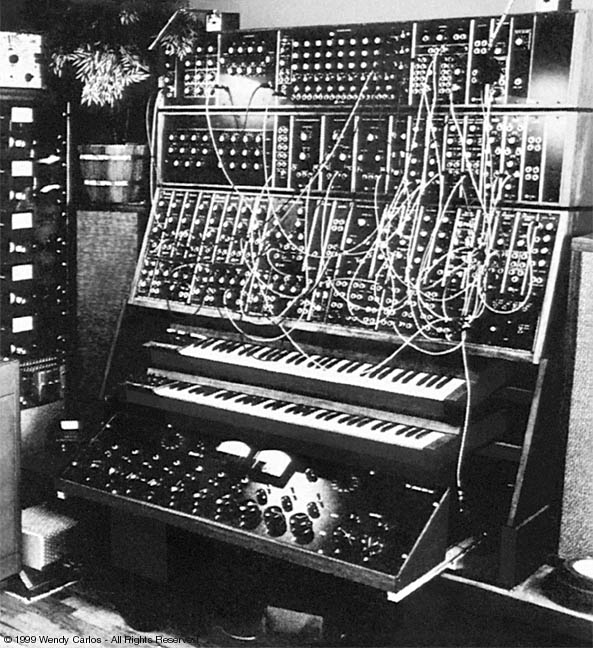 |
| The Modern 'Synthesist' has only very little to do with the now ancient concept of a 'synthesizer'. Probably. |
Friday, June 3, 2011
Youthful Idealism
Some people seem to think that ideals are something to be grown out of in the face of the harsh realities of life. Forgive my youth of 26, but I do think I have grown exponentially in my understanding of the world since I was 18. It was then, 2003-2004, that I set off on this path to become a composer. At the time I kept an interesting journal consisting of almost daily epiphanies about music. Although in the intervening years I've come to better understand the world of music, it is clear to me now that some of the 'epiphanies' of those heady days were lasting nuggets of truth. So, an ongoing series of blog entries will focus on bite-sized pieces of young wisdom taken from these visionary files. (I've got to do something with this stack of papers!) As a starting point, I reprint here, with my own hand-typed permission, my 2006 post-mission reevaluation of these early compositional-philosophical musings. Personally, I hope to reconnect with my roots and bring my earliest recorded thoughts on composition to light for the first time.
 A Youthful Visionary, circa 2004

From Sunday; August 27, 2006:
Over the last three [now eight] years my understanding of musical history and of the current state of the music world that surrounds me has taken a wild ride. I remember those early days, when I came to the general and not entirely true conclusion that classical music was 'good' and popular music, 'bad'. I remember studying searching, reading all I could about what happened to music in the 20th century, trying to figure out what was going on right now in the world of the modern composer. Again I came to the not-entirely-true conclusion that music as an Art (with a capital 'A') was dying or dead. It was not until I began to buy lots of recordings of the actual music in question while serving in St. Petersburg on my mission that I really came to understand. Who am I to be as a composer? What is my place amongst the composers of my time?
So, half-a-decade-ago self, how did you answer? Let me edit your five paragraphs down to one:
The young composer of today stands on the backs of giants, or he can if he will. More composers have gone before, than ever before. (The same is true, of course, for each generation) There is so much to draw on, so many sounds, so many ways of writing music, so many textures. So many doors have been hardly opened by the experimenters of the 20th century that the composer of today is faced with the unprecedentedly monumental task of exploring these avenues, taking it all in, making conscious musical decisions to incorporate and work on certain elements in his music. He forges ahead and looks back at the same time. The greatest opportunities ever are open for the composer. The difficulty is creating your own rules to make music in a world where anything goes. That is where the study and application of what has gone before comes in. Each composer finds his own sound in the world. Each leaves his own distinct mark in some way. The last 50 years have taken music to literally unheard of places, completely altering the musical landscape. I think that the mark of of the great composers of the present will be determined largely by how they assimilate and express and advance the ideas of the last century. So it will go until our grandchildren will do things that will stagger us.
Now back to June 2011. Is assimilation of the past the only mark of future great composers? No. But there won't be great composers who don't to a large extent acknowledge their debt to the past. There are no great jazz musicians who have completely original styles who didn't pay their dues first learning to emulate other greats. (That may be the first direct reference on this blog to jazz, about time since my undergrad degree is in Jazz Studies) I would also note that I feel quite satisfied that I have done my best in the past five years to make sure that I am engaged in just the sort of compositional education that I feel is a necessary for a composer. When I talk with my peers at BYU, I often ask them what they are listening to lately. It is very telling when somebody tells me that they don't listen to much recent music. Bach and Brahms are great, their contributions to music should be learned by every composer, but you can't expect to be relevant, well-rounded, or fully developed as a composer unless you have a pretty good idea of the contemporary musical scene. How could you set out to be a non-movie composer and not know what kind of professional field you are entering? Its like trying to become a meteorologist but only reading books on meteorology from the 1800s, and having no idea what good, modern meteorology is all about. Of course there are music history classes, etc, but I believe that you've got to have a passion for this art if you want to succeed at it, and that means meeting everybody from John Cage to Osvaldo Golijov.
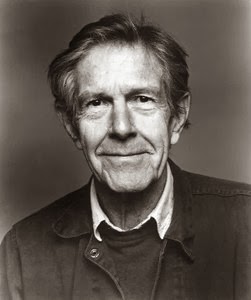

I find my 2006 statements pretty much still in line with my present 2011 views and would only add the solid conclusion that I believe there is amazing new music in store as composers continue the great musical tradition of advancing the art. What do you feel are the main challenges for new composers/new music?
So, half-a-decade-ago self, how did you answer? Let me edit your five paragraphs down to one:
The young composer of today stands on the backs of giants, or he can if he will. More composers have gone before, than ever before. (The same is true, of course, for each generation) There is so much to draw on, so many sounds, so many ways of writing music, so many textures. So many doors have been hardly opened by the experimenters of the 20th century that the composer of today is faced with the unprecedentedly monumental task of exploring these avenues, taking it all in, making conscious musical decisions to incorporate and work on certain elements in his music. He forges ahead and looks back at the same time. The greatest opportunities ever are open for the composer. The difficulty is creating your own rules to make music in a world where anything goes. That is where the study and application of what has gone before comes in. Each composer finds his own sound in the world. Each leaves his own distinct mark in some way. The last 50 years have taken music to literally unheard of places, completely altering the musical landscape. I think that the mark of of the great composers of the present will be determined largely by how they assimilate and express and advance the ideas of the last century. So it will go until our grandchildren will do things that will stagger us.
Now back to June 2011. Is assimilation of the past the only mark of future great composers? No. But there won't be great composers who don't to a large extent acknowledge their debt to the past. There are no great jazz musicians who have completely original styles who didn't pay their dues first learning to emulate other greats. (That may be the first direct reference on this blog to jazz, about time since my undergrad degree is in Jazz Studies) I would also note that I feel quite satisfied that I have done my best in the past five years to make sure that I am engaged in just the sort of compositional education that I feel is a necessary for a composer. When I talk with my peers at BYU, I often ask them what they are listening to lately. It is very telling when somebody tells me that they don't listen to much recent music. Bach and Brahms are great, their contributions to music should be learned by every composer, but you can't expect to be relevant, well-rounded, or fully developed as a composer unless you have a pretty good idea of the contemporary musical scene. How could you set out to be a non-movie composer and not know what kind of professional field you are entering? Its like trying to become a meteorologist but only reading books on meteorology from the 1800s, and having no idea what good, modern meteorology is all about. Of course there are music history classes, etc, but I believe that you've got to have a passion for this art if you want to succeed at it, and that means meeting everybody from John Cage to Osvaldo Golijov.
John Cage, 1912-1992
John Cage is a controversial and influential composer from the last half of the 20th Century.
I consider his main contribution to the art to be his questioning of the traditional role of the composer.

Osvaldo Golijov, b. 1960
Grammy-winning Golijov represents a new direction of composers whose music is an accessible crossroads of styles and techniques.
I find my 2006 statements pretty much still in line with my present 2011 views and would only add the solid conclusion that I believe there is amazing new music in store as composers continue the great musical tradition of advancing the art. What do you feel are the main challenges for new composers/new music?
Wednesday, May 25, 2011
Ravel on Inspiration vs. Work
Here is a can of worms I found while sorting through a massive stack of composition papers currently traveling in my backpack. Let's open it!
From a book called "A Ravel Reader" here is a letter he wrote to someone in response to their query about the nature of his musical inspiration.
"All that I am able to affirm is that in 1924, when I undertook the Sonata for violin and piano, which has just been completed, I had already determined its rather unusual form, the manner of writing for the instruments, and even the character of the themes for each of the three movements before "inspiration" had begun to prompt any one of these themes.
And I don't think I chose the easiest way."
In the footnotes to the quote, it adds "Ravel often quoted Baudelaire's aphorism: "Inspiration is decidedly the sister of daily work." In a rehearsal for the same Sonata, Ravel told the violinist, when asked about the role of inspiration in the work: "Inspiration - what do you mean? No - I don't see what you mean. The most difficult thing for a composer, you see, is choice - yes, choice."

So - is inspiration for musical works merely the by-product of hard work? Or are the composer's 'choices' the same thing as inspiration?
I often, if not every time, find myself with some form and layout of ideas, some 'character' of the piece determined even before I lay a single note to the page, or even have a single note in mind. It would seem that when composing this way a constant series of choices is made, with the aim of filling a particular mold of the composer's own design. At what point then is the composer inspired? I personally feel the most inspired at the start of the process, when making broad decisions about the work, and then once again when I have a draft of the piece written down, roughly corresponding to my initial conception, and I make more detailed choices that refine the work. It is often then that the I realize the true nature of the piece. Often I find the way things are working out at that point is beyond and better than my initial conception.
Is Ravel right? Is Wahlquist wrong? Is this too calculated a process for 'real' music to result? Can inspiration really be present when the composer doesn't even have any notes in mind?
From a book called "A Ravel Reader" here is a letter he wrote to someone in response to their query about the nature of his musical inspiration.
"All that I am able to affirm is that in 1924, when I undertook the Sonata for violin and piano, which has just been completed, I had already determined its rather unusual form, the manner of writing for the instruments, and even the character of the themes for each of the three movements before "inspiration" had begun to prompt any one of these themes.
And I don't think I chose the easiest way."
In the footnotes to the quote, it adds "Ravel often quoted Baudelaire's aphorism: "Inspiration is decidedly the sister of daily work." In a rehearsal for the same Sonata, Ravel told the violinist, when asked about the role of inspiration in the work: "Inspiration - what do you mean? No - I don't see what you mean. The most difficult thing for a composer, you see, is choice - yes, choice."

So - is inspiration for musical works merely the by-product of hard work? Or are the composer's 'choices' the same thing as inspiration?
I often, if not every time, find myself with some form and layout of ideas, some 'character' of the piece determined even before I lay a single note to the page, or even have a single note in mind. It would seem that when composing this way a constant series of choices is made, with the aim of filling a particular mold of the composer's own design. At what point then is the composer inspired? I personally feel the most inspired at the start of the process, when making broad decisions about the work, and then once again when I have a draft of the piece written down, roughly corresponding to my initial conception, and I make more detailed choices that refine the work. It is often then that the I realize the true nature of the piece. Often I find the way things are working out at that point is beyond and better than my initial conception.
Is Ravel right? Is Wahlquist wrong? Is this too calculated a process for 'real' music to result? Can inspiration really be present when the composer doesn't even have any notes in mind?
Wednesday, May 18, 2011
My Friend Dmitri
ON AUGUST 9TH, 1975, about 10 years before I was born, my friend Dmitri died, literally suffocated by lung cancer for which he had previously undergone treatment. A terrible and ironic way for him to go - imagine: a Soviet composer, suffocated!

Dmitri Dmitriyevich Shostakovich was the poster-child of all Soviet composers. He completed his conservatory training in St. Petersburg/Petrograd/Leningrad with what would become his world-famous 1st symphony, written at age 19 in 1926, as the icy fingers of Soviet life were tightening their grip on all aspects of Russian culture. It isn't in the scope of this post to give his complete biography, the casual reader will find the Wiki article extremely interesting. Suffice it to say that he spent his entire life as a composer under the thumb of the Soviet regime. If you are looking for more information, Laurel Fay's Shostakovich: A Life is supposed to be the best current biography of the composer. Fascinating to me is that it is so hard to write an unbiased biography of this undisputed genius - there are at least two sides of the composer that the world has to come to terms with. For most of the period of Soviet tyranny, Shostakovich was often seen as a communist lackey. His name appeared on all sorts of weird Soviet articles and decrees, he could be seen at any number of official Soviet functions and offices. His 7th symphony, written about the siege of Leningrad, rallied audiences around the Allied (including Soviet) world and earned him a Time magazine cover.

It is tempting to brush off these pro-Soviet leanings (including a number of 'la-dee-da ra-ra motherland' trash compositions) as being the result of the persecution that the composer faced during the "cult of personality" which excused comrade Stalin and his cronies every indiscretion. Twice during Stalin's reign, Shostakovich was singled out for official persecution, during which times (periods starting in 1936 and 1948, respectively) hardly any of his works received public performance or official approval. However, the reality is, many of the composer's biggest compromises to the Soviet system (including officially joining the communist party) took place after Iosef Vissarionovich was long dead.
That said, there is another face of Shostakovich, one that has only really come to light since his death. In 1979 (5 years after he died) the controversial book Testimony appeared, purporting to be a confessional biography of the composer. While much of the actual content of that book has been seriously called into question, it has spawned a whole new era of Shostakovich research because it opens up the question: How did Shostakovich really feel about Stalin, the Soviet state, and composing under the scrutiny of Soviet handlers?
For years scholars have loved to dig into Shostakovich's works to find coded hate-mail to the Soviets, or to find meaning in the many strings of musical quotations and borrowings found in his music. Unfortunately, all they have to go on is A. the reports of family and friends (hardly an unbiased source) and B. the music itself.
I'm inclined to take another position altogether on Shostakovich's music. I come to this after having just read Wendy Lesser's excellent new book Music for Silenced Voices: Shostakovich and His Fifteen Quartets. The book takes an autobiographical approach to understanding Shostakovich's music, not so much by way of interpreting the music, but by creating a context for the works. Using the latest research and interviews with those who knew Shostakovich, Lesser doesn't interpret the string quartets as nutty cryptograms waiting for us to solve their mysteries, but as pure pieces of music, full of musical expression even without understanding some sort of musical-code. The biographical details in the book serve mostly to give us an idea of the sort of things that would have been on the composer's mind as he wrote each quartet, and the results were extremely edifying. If you didn't know it already, you may have been surprised to learn above that Shostakovich wrote 15 string quartets. He also wrote 15 symphonies, and the two bodies of work have therefore been singled out as some of the composer's most important work. Maybe that is why he wrote 15 of each, more than most composers visit either genre. They have often been compared: The symphonies are the official Shostakovich and the quartets the private Shostakovich. The Symphonies are his messages to the world and the quartets his messages to his friends. The symphonies lie, the quartets tell the truth. The time period of the symphonies spans his entire creative life; he didn't start writing string quartets until after the first official attack of his music in 1936. Whatever the case, I think the real answer is much more complex, and when it comes down to the music itself, rather irrelevant.

My personal feelings for the music of Shostakovich come to me by way of two of my more direct musical ancestors, both Soviet composers who grew up under the shadow of Shostakovich: Alfred Schnittke and Sofia Gubaidulina. Reading about them I have gotten a feel for what Shostakovich meant to generations of Soviet composers. Whether they hated or loved him later on, you can hear his overwhelming influence in their early works. He was both a rallying standard and a hated compromiser. Having lived in St. Petersburg and its environs for two years, I came to realize what surprises many in the west: Shostakovich, and classical music in general, were more important and familiar to the average Soviet than Copland ever was to your average Joe American. Many in St. Petersburg still weep to hear his 7th Symphony.
To me, Shostakovich is sort of like my musical uncle who had a really, really crazy life. I relate to him as someone from St. Petersburg, as a composer trying (but not always succeeding) to live up to his musical ideals, and as a man for whom personal relationships became a primary source of musical inspiration (now, that isn't to say I plan on having three wives and numerous affairs!) Above I called him my friend; I really do feel an affinity for Shostakovich. I have a strong intimation that we in fact were friends, in another time and place before our lives started less than the relatively puny span of a century apart.
Not long after Shostakovich's music was officially banned from performance in 1948, (he was being too 'formalist' and bourgeois, whatever that means) there was a big music conference in America. How could the Soviet Union be represented by less than its best composer? Shostakovich called in sick. Soon after, he received a telephone call, "Please hold, Comrade Stalin is coming on the line." Stalin asked after his health and insisted that the best doctors see the composer, (his health plan had been downgraded along with the other persecutions) and asked if he would go to the USA for the 'Congress of Peace and Culture.' I love Shostakovich's response, both brave and political: "...Of course I will go, if it is really necessary, but I am in a fairly difficult position. Over there, almost all of my symphonies are played, whereas over here they are forbidden. How am I to behave in this situation?"
You can imagine the silence on the line before Stalin answered, "How do you mean forbidden? Forbidden by whom?" Who knows if he was really ignorant, or if he was playing a really sick game. Shostakovich told him it was the State Committee for Repertoire which had placed the restrictions, and Stalin assured him it was a mistake. Sure enough, the 'official' sanction lifted shortly afterwards, although in fact Shostakovich's music was not widely performed for several more years until the tyrant was dead. Shostakovich did go to the conference, and did toe the party line there (attacking in a speech the 'decadent' music of Stravinsky).
In any case, I feel like this recent read has filled out holes in my mental portrait of Shostakovich. A complex and contradictory portrait. Perhaps most intriguingly of all is the 'what-if:' what if Shostakovich had left the Soviet Union, and continued on composing without the oppression and opposition? Would he still be regarded as one of the greats of the 20th century, or would he be an obscure post-romantic composer swallowed in the shadow of Stravinsky and Schoenberg, two other immigrants to the States whose music pulled nearly all of Western music in its wake? In other words, was the Red Hell of Shostakovich's life the molding furnace that made him great?
As a young composer beginning my own compositional career nearly a century after Dmitri did, I ask myself: how can I, a composer with almost no constraints on what kind of music I can write, find a way to make my music matter as much to somebody as the music of Shostakovich did and does to countless millions around the world? I understand that 'modern academic music' is probably necessarily doomed to relative obscurity, but this whole last year, as I've had it drilled into me at school that it doesn't matter if my music is 'popular' or not, I find myself wondering: why not? In 1941 the world rose up to embrace Shostakovich's 7th Symphony as the anthem against Fascism. I can't help but dream that music could reach out the same way today. Why shouldn't my music matter to people? Does it always have to be compromising my art to create something of universal or at least wide appeal?

Dmitri Dmitriyevich Shostakovich was the poster-child of all Soviet composers. He completed his conservatory training in St. Petersburg/Petrograd/Leningrad with what would become his world-famous 1st symphony, written at age 19 in 1926, as the icy fingers of Soviet life were tightening their grip on all aspects of Russian culture. It isn't in the scope of this post to give his complete biography, the casual reader will find the Wiki article extremely interesting. Suffice it to say that he spent his entire life as a composer under the thumb of the Soviet regime. If you are looking for more information, Laurel Fay's Shostakovich: A Life is supposed to be the best current biography of the composer. Fascinating to me is that it is so hard to write an unbiased biography of this undisputed genius - there are at least two sides of the composer that the world has to come to terms with. For most of the period of Soviet tyranny, Shostakovich was often seen as a communist lackey. His name appeared on all sorts of weird Soviet articles and decrees, he could be seen at any number of official Soviet functions and offices. His 7th symphony, written about the siege of Leningrad, rallied audiences around the Allied (including Soviet) world and earned him a Time magazine cover.

That said, there is another face of Shostakovich, one that has only really come to light since his death. In 1979 (5 years after he died) the controversial book Testimony appeared, purporting to be a confessional biography of the composer. While much of the actual content of that book has been seriously called into question, it has spawned a whole new era of Shostakovich research because it opens up the question: How did Shostakovich really feel about Stalin, the Soviet state, and composing under the scrutiny of Soviet handlers?
For years scholars have loved to dig into Shostakovich's works to find coded hate-mail to the Soviets, or to find meaning in the many strings of musical quotations and borrowings found in his music. Unfortunately, all they have to go on is A. the reports of family and friends (hardly an unbiased source) and B. the music itself.
I'm inclined to take another position altogether on Shostakovich's music. I come to this after having just read Wendy Lesser's excellent new book Music for Silenced Voices: Shostakovich and His Fifteen Quartets. The book takes an autobiographical approach to understanding Shostakovich's music, not so much by way of interpreting the music, but by creating a context for the works. Using the latest research and interviews with those who knew Shostakovich, Lesser doesn't interpret the string quartets as nutty cryptograms waiting for us to solve their mysteries, but as pure pieces of music, full of musical expression even without understanding some sort of musical-code. The biographical details in the book serve mostly to give us an idea of the sort of things that would have been on the composer's mind as he wrote each quartet, and the results were extremely edifying. If you didn't know it already, you may have been surprised to learn above that Shostakovich wrote 15 string quartets. He also wrote 15 symphonies, and the two bodies of work have therefore been singled out as some of the composer's most important work. Maybe that is why he wrote 15 of each, more than most composers visit either genre. They have often been compared: The symphonies are the official Shostakovich and the quartets the private Shostakovich. The Symphonies are his messages to the world and the quartets his messages to his friends. The symphonies lie, the quartets tell the truth. The time period of the symphonies spans his entire creative life; he didn't start writing string quartets until after the first official attack of his music in 1936. Whatever the case, I think the real answer is much more complex, and when it comes down to the music itself, rather irrelevant.
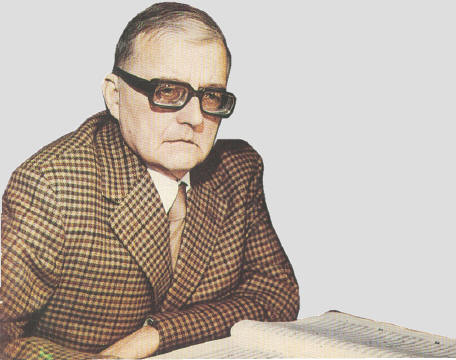
My personal feelings for the music of Shostakovich come to me by way of two of my more direct musical ancestors, both Soviet composers who grew up under the shadow of Shostakovich: Alfred Schnittke and Sofia Gubaidulina. Reading about them I have gotten a feel for what Shostakovich meant to generations of Soviet composers. Whether they hated or loved him later on, you can hear his overwhelming influence in their early works. He was both a rallying standard and a hated compromiser. Having lived in St. Petersburg and its environs for two years, I came to realize what surprises many in the west: Shostakovich, and classical music in general, were more important and familiar to the average Soviet than Copland ever was to your average Joe American. Many in St. Petersburg still weep to hear his 7th Symphony.
To me, Shostakovich is sort of like my musical uncle who had a really, really crazy life. I relate to him as someone from St. Petersburg, as a composer trying (but not always succeeding) to live up to his musical ideals, and as a man for whom personal relationships became a primary source of musical inspiration (now, that isn't to say I plan on having three wives and numerous affairs!) Above I called him my friend; I really do feel an affinity for Shostakovich. I have a strong intimation that we in fact were friends, in another time and place before our lives started less than the relatively puny span of a century apart.
Not long after Shostakovich's music was officially banned from performance in 1948, (he was being too 'formalist' and bourgeois, whatever that means) there was a big music conference in America. How could the Soviet Union be represented by less than its best composer? Shostakovich called in sick. Soon after, he received a telephone call, "Please hold, Comrade Stalin is coming on the line." Stalin asked after his health and insisted that the best doctors see the composer, (his health plan had been downgraded along with the other persecutions) and asked if he would go to the USA for the 'Congress of Peace and Culture.' I love Shostakovich's response, both brave and political: "...Of course I will go, if it is really necessary, but I am in a fairly difficult position. Over there, almost all of my symphonies are played, whereas over here they are forbidden. How am I to behave in this situation?"
You can imagine the silence on the line before Stalin answered, "How do you mean forbidden? Forbidden by whom?" Who knows if he was really ignorant, or if he was playing a really sick game. Shostakovich told him it was the State Committee for Repertoire which had placed the restrictions, and Stalin assured him it was a mistake. Sure enough, the 'official' sanction lifted shortly afterwards, although in fact Shostakovich's music was not widely performed for several more years until the tyrant was dead. Shostakovich did go to the conference, and did toe the party line there (attacking in a speech the 'decadent' music of Stravinsky).
In any case, I feel like this recent read has filled out holes in my mental portrait of Shostakovich. A complex and contradictory portrait. Perhaps most intriguingly of all is the 'what-if:' what if Shostakovich had left the Soviet Union, and continued on composing without the oppression and opposition? Would he still be regarded as one of the greats of the 20th century, or would he be an obscure post-romantic composer swallowed in the shadow of Stravinsky and Schoenberg, two other immigrants to the States whose music pulled nearly all of Western music in its wake? In other words, was the Red Hell of Shostakovich's life the molding furnace that made him great?
As a young composer beginning my own compositional career nearly a century after Dmitri did, I ask myself: how can I, a composer with almost no constraints on what kind of music I can write, find a way to make my music matter as much to somebody as the music of Shostakovich did and does to countless millions around the world? I understand that 'modern academic music' is probably necessarily doomed to relative obscurity, but this whole last year, as I've had it drilled into me at school that it doesn't matter if my music is 'popular' or not, I find myself wondering: why not? In 1941 the world rose up to embrace Shostakovich's 7th Symphony as the anthem against Fascism. I can't help but dream that music could reach out the same way today. Why shouldn't my music matter to people? Does it always have to be compromising my art to create something of universal or at least wide appeal?
.jpg)
Add a lightning scar, (He once wrote a ballet called Bolt)
put him in front of an orchestra with a baton,
and he will face the dark forces that cannot be named
(lest the censors catch onto his subversive aims!)
Finally, I can't finish this post without putting in a plug for one of my favorite works of all time, Shostakovich's monumental set of 24 Preludes and Fugues. It is one of the few works for which I have a preferred recording: Vladimir Ashkenazy on piano. (Jazz pianist Kieth Jarrett has also recorded the set, which is interesting, but not my favorite) Each prelude is something wonderful, and each fugue a portal into the transcendent. While the set is inspired by and owes much to Bach's sets of preludes and fugues (The Well-Tempered Clavier), it is completely a product of the twentieth century. It is perhaps the most abstract and free music Dmitri every wrote. Listen to it some Sunday when you can just sit and focus. Is this the voice of compromise, pandering to the public or to the demands of Socialist Realism? Maybe you will hear what I hear, the beautiful songs of my friend Dmitri.
Subscribe to:
Posts (Atom)