Sunday, January 31, 2010

Beautiful Truths tonight live with guest star Hey! It's All Music!

THE OPENING ACT of of tonight's blog is "Hey! Its All Music!"

I AM A COMPOSER. To many this creates an instant image of either a wig wearing maniac or John Williams. Not so much the actual image of John Williams, just the idea of him as one of two living composers that are household-ish names. I like the term composer but to me it expresses a number of things besides "a maker of stuffy old music" or "movie music guy." A composer is a musical poet/artist, crafting soundscapes instead of words or paint. A composer can be (as I want to be) a songwriter or a psalmist, though not all songwriters or psalmists are composers. A composer can do movies or ballets or jazz symphonies or song cycles or even albums or ring tones. Critics impose any number of appellations to a composer's music, "minimalist" "new wave" "emo" "Quintessentially Modern American" etc. The important thing to me is that I am making music. As I have repeatedly stated, I want to draw on a vast palette of music means/styles/textures to achieve my expressive ends. No matter what kind of music those means are employed to create, "Hey, its all music!"

SO IT IS that I hope to be found writing songs that could be found on the radio, concertos that receive standing ovations in the concert halls, reverent works that invite the Holy Spirit to a religious service, or even rousing works that glorify the freedoms and principles on which America is founded. I want to make music for the people, music that is meant to be listened to by people who need music for specific and important functions in their lives. In each 'facet' of my work I want to apply the same artistic integrity, dedication to quality and wellspring of inspiration. For me it feels entirely natural to combine all these kinds of works into one portfolio and call the man who made them 'Composer.' Whether a love song or hymn, a symphony or a concept album, a jazz suite or an oratorio, there will always be behind it: Michael Wahlquist, Composer. No matter what the 'genre' of work I am creating, the same standards apply, especially moral standards. As a composer I have a purpose, and that brings us to tonight's main act.

LAST WEEKEND I was in Pittsburgh (a long way from Rexburg, Idaho where I live, or St. Petersburg, Russia, where I served my mission, but it does have a 'burg' suffix, so it must be destiny for me to live there. The random 'h' even echoes the random 'h' in my last name) with interviews at the University of Pittsburgh and Carnegie Mellon University. I particularly had a great time talking with composers Matthew Rosenblum and Eric Moe from the former and Nancy Galbraith and Leonardo Balada from the later. It was a wonderful experience and as different as the two schools are, I would love the opportunity to study at either. I'm also waiting to hear back from a few schools closer to home, in Utah.

A CURIOUS THING happened while speaking with Leonardo Balada. It has had me thinking ever since. He asked me about my time in Russia, whether it had been difficult, since they were mostly atheists. The question following was, "I'm an atheist, do you think I'm a bad person?" I have to admit, I was not expecting such a question, or really any questions about my faith, since I had only a 20 minute interview with these two composers at Carnegie Mellon, and since the discussion was supposed to focus on my portfolio of works. In any case, hopefully they got what they wanted from the interview, which did otherwise focus on my portfolio, influences, and education. Perhaps even my answer to his offhand question let them know that I am a composer of convictions. I told him that of course I respect all people no matter what they believe, and when it comes to music, I really appreciate it when a composer uses their music to express their philosophies or beliefs - how they feel about life. I then used the example of work of his, an "Agnostic Requiem" (by which title I might have guessed he would bring up my faith!) I'm really not worried that they will let my faith bias their decision. Nancy Galbraith, the other composer present, has plenty of religious music on record.

I REALLY BELIEVE that there is a lot of Truth, Beauty, and Wisdom that comes from people of all or no faith. I enjoy a good Requiem or even a Mass or Passion, even though I can't agree with every part of they message they contain. I enjoy a good love song, because if there is one way that almost everyone in the world glimpses the Divine it is by being in love and creating families. I love a well constructed jazz solo or violin concerto, because there is something inherently glorious in the act of musical expression and creation.

NOT EVERY composer/music-maker sets out with such a determination to express their beliefs and views of life through their music. I intend to be one of those composers who does. There is a such a vacuum of works that portray, endorse, promote and glorify the things that I believe in and for which I stand. One of the central tenets of my faith is that I 'seek after' things that are 'virtuous, lovely, of good report or praiseworthy'. I feel a sense of obligation to make sure that my music stands up for Truth and Beauty, that it is virtuous, lovely, and indisputably praiseworthy. There is so much music out there taking up people's attention and lives with things that either don't matter that much or even are harmful. I regard it as my duty as a composer, as a music maker and therefore entertainer, to make sure I stand in opposition to such things, as a one holding up a light and standard.

SO IN my love songs you will see a portrayal of the ideal of love and family life that I believe in. In my reverent music for church you will find conveyed as clearly and beautifully as possible the eternal truths on which I found my life. In my more classical works intended for the concert hall you will hear principles of Order and Beauty, you will find symbolism of concepts of faith and truth. To me it is all music, and it all expresses something about how I feel about life. I intend to be an active influence for good in the life of any person who hears my music. There is so much other music demanding our attention, I don't want to submit anything to the world that doesn't live up to these ideals.

I AM A COMPOSER. I want to make a variety of music, but I want it all to matter to the discerning listener. I know it can matter to someone because my music will embody, exemplify and exalt the things that matter to me. Those are the things of love, of family and eternity and gospel truths that I know will bless anyone who embraces them. So even if a person only ever hears a nocturne from me, or a love song, they will have heard something that is striving for true beauty and beautiful truths.

Wednesday, January 27, 2010

Starving Composer For Sale

Last night I listened to the State of the Union Address from President Obama. This being my composing blog, I won't remark on how I feel about the President or his policies. Let me say just two things that relate to my life as a composer.

I pray for Obama, literally - he is the one who is at the head of the nation, whether or not my vote was for him. I pray that his influence will be for good and help keep America the country it should be. In Rexburg, Idaho there may not be a lot I can do to support our nation, but I believe praying for our leaders is one valid way. It certainly won't hurt to ask that they have the courage, moral integrity, and even flashes of divine inspiration to do the right things for our nation. Just like I believe in the National Endowment for the Arts slogan "a great nation deserves great art," I believe that our great nation deserves great leaders, and those leaders deserve our prayers and support to help them be great.

The second thing I want to confess is that I actually broke down and wept, sobbing in my hands, when the President spoke of education reform. It isn't that the programs proposed will immediately effect me - they deal with leniency on loans and increase of Pell grants, etc. What particularly got to me was when he said why they are doing these changes, "Because in the United States of America, no one should go broke because they chose to go to college." That touched me deep down at the core of what is going on in my life right now.

I got into college with the desire to make music. Over the course of my first year, that desire transformed solidly into composing. However, I found that BYU-Idaho didn't offer a degree in composing. After some thought and talks with my professors, I settled on Jazz Studies as 'the next best thing' and as a stepping stone to a later, graduate degree in composing. I also believed (and still do) that performance experience, I mean actually making music, is essential for a composer to understand how to write effectively. So, besides a two year break serving a mission for the LDS Church in St. Petersburg, Russia, I completed my degree in just four years. I even took classes in the summer sessions to keep this goal. Part of my rush to complete was the simple desire to move on: since BYU-Idaho didn't offer a degree in composition, I wanted to get my Jazz Studies degree and move on to a more focused education in composition. The other reason that I wanted to finish my degree in the traditional four years (unusual for a music student at BYU-I or many universities) is that I had committed to getting it in that time. The semester after I got back from my mission, I was offered a part time job teaching seminary. It was a great blessing. The generous compensation helped me get through school with relatively little dept. The job also offered the prospect of a career, if I were one of the lucky few who was chosen at the end of student teaching to get accepted full time. All they wanted in terms of educational experience was a degree, it didn't matter in what. I chose to stick to the degree I had already chosen, Jazz Studies, knowing that I could complete its requirements soonest. So it was that I committed to graduating in April 2009 so that I would be available for hire within about a two year period from the time my student teaching employment began. I stuck with it, even though it became increasingly apparent that not only was jazz not what I wanted as a career but even as it became more of a burden to pursue increased composing opportunities amidst increased demands from the jazz department. Pressure in the seminary program increased also as the time of hiring approached. I was visited in the classroom and interviewed by representatives from the regional offices and even Salt Lake.

Amidst all of this the economy collapsed. The LDS Church, ever quick to make fast the ship in the storm, as it were, initiated a hiring freeze that meant only a handful of student teachers (among hundreds church-wide) would be offered full-time jobs. That, among other factors, soon put an end to my hopes of having a stable career right out of college that would allow me to pursue composing on the side. Although it was difficult to be told 'no' I still interpreted this blow as a loving Father's way of saying, "I have something else in store for you!" It was still with a heavy heart I turned over my student teaching positions for the final trimester to teachers who still had a shot at being hired. I dedicated myself to finishing my studies as planned and moving on to plan B: immediately pursuing an education in composition. So in April of 2009 I 'graduated' from BYU-Idaho. However, it wasn't until the completion of my senior recital in July that I actually received my diploma. With a jazz band tour to California looming and suddenly out of the job, my wife and I took over a small managing position for a few girls' housing units on the corner of campus. While this provided no income, we had a place to stay. During the summer months I made the biggest mistake of my life, I think, and didn't actively look for a job until after my senior recital. The months and money slipped away as I practiced, composed, and began to get ready for grad school.

Finally I took up a job at a call center, part time. It is the kind of work that would have been just fine as a busy college student needing a small amount of income, but with a diploma in my hand, and wife and child to support, and high hopes, it was a bitter-sweet experience to have the job. I have been unable to find more work since, with the exception of a few grueling weeks in the fall driving trucks for the potato harvest. Several eateries in Rexburg have gone under, stable employers like the grocery store haven't hired in months. My wife Qait and I have had to move in with my parents. I can't even say how grateful I am for my parents doing this, or how difficult it is to be a married college graduate living at home again. Not only is it demoralizing and embarrassing, it seems to have taken the wind out of my sails. The only thing I managed to accomplish all fall semester (besides potatoes) was to compose a piece for harp, arrange my prelude and fugue, rework my string quartet, and chose and apply to universities. That was a huge process, don't get me wrong. But I wish I could have done it alongside a full time job, and I wish I could have done still more. Technically, I should have applied a year ago so that I could already be in grad school, but a year ago I was just trying to graduate and get hired to teach seminary. In a lot of ways this has felt like a low point of my life. When my car broke down, I had to borrow my grandma's car, since she couldn't drive right after her stroke, and I could in no way afford to replace my car. My wife doesn't have a place to call her own, it has been difficult to see her go through this. I rely on the generosity of my parents for nearly all that we have, from phones to car insurance to food. I am grateful and I feel awful.

It was a ray of light last week when I got to go to Pittsburgh. Carnegie Mellon University called me out for an interview, saying my portfolio had received positive faculty feedback. University of Pittsburgh was kind enough to also accommodate meeting with me on the same trip, and so I had a fantastic weekend dreaming of what it could be like to continue my studies and launch my career in such world-class institutions and such a well-connected location. However, the trip burned through some of the last savings I had from the potato job.

Maybe it is my fault for not getting a degree in engineering or financing or high school teaching or something else that is useful 'right out of the box.' I know that besides being a benefit to and advancement of our culture, my degree in Jazz Studies and pursuit of a degree in Composition offers little that is of immediate value to society or the economy. But I chose this path, and swore myself to it, at a time when I thought our culture, our economy and nation could support and use some of the 'higher things'. This economic crisis has already ended one potential career for me. Even though my degree can't even get me a burger-flipping job, I am determined to make it work. I have to admit my heart would be broken if I didn't get into any of the schools I applied to (three of seven have already said no, thank you, good luck), but I will continue to compose, to pursue this dream that I can make music needed by our society, my religion, and our culture. I suppose plan C would involve getting more specialized training in something useful like paper-filing or even a teaching certificate for high-school level. Plan D would involve joining the armed forces, who respect the fact that I got a degree, and would start me at a higher rate of pay for it.

So it was that I broke down (and quickly looked around to see that none of my sisters was looking over my shoulder) when Obama, the President of the United States, reaffirmed what I have been feeling for months: That no one should go broke because they chose to go to college, or in other words: education should matter. It is no use for me to wish that my professors would have talked me out of my degree, or complaining that they didn't prepare me for a career. This isn't their fault. I am the one who rushed to graduate like a good boy, knowing that Jazz Studies was a performance degree and that I am not a jazz performer at heart. So I hope to find 'salvation' in more education, and not only that, but the relative stability that comes from being a student, the professional opportunities that come from it, and hopefully someday, a stable career doing exactly what I've always wanted to do: teach and make music. In both of those pursuits I can hopefully give back to a society I am praying will help me get through this without making me feel like I can never pay back the debt, financial and otherwise.

It probably isn't chance that I just answered the phone to hear my dad tell me, "you are a good boy, a great boy." I am glad he still thinks so. I also hope that I can hear him someday call me a great man.

Thursday, December 10, 2009

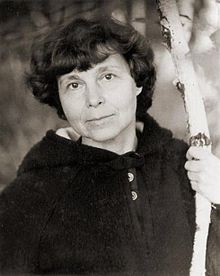
Sofia Gubaidulina


She's Russian, her name is pronounced "Goo-by-dull-EEN-a," and she is one of my all time favorite composers. I first heard her music in Russia, when I purchased a CD which contained one of her string quartets. (The same excellent CD also exposed me to two of my other favorite composers, Georgy Kurtag of Hungary and Witold Lutoslawski of Poland) Gubaidulina's music is different than any of my favorite composers, in that I have to brace myself whenever I listen to her music, as you might for medicine. And in this case, that's good thing. Read on!

Sunday, November 15, 2009

Grad School Portfolio!

Its that time of life again, applying for college. Except this time they don't all send you cute little info packets. Its been quite the hunt to narrow down the list and choose an acceptable amount to apply to. I'm most excited about my portfolio...There are three works that I would like to describe here.

The first work is my movement for string quartet, newly revised. I will probably rename it "Looking Glass" or the Russian equivalent, "Zerkalo" - what do you think? It is a purely minimalist work. It takes note groupings of 2, 3, 5, & 7 in constant juxtaposition. During the first performance last year the players had to count under their breath like the devil was out to get them. The first section has just the cello, viola, and second violin with 2, 3, and 5 respectively. They trade entrances and build into the second section, where the first violin enters with 7. This section continues for 210 beats, the lowest common denominator of the four sections. (I remember I was in my Politics class when I figured that out!) A sustained chord marks the break into the third section, a more sustained passage where all four instruments trade off with each note grouping in turn -7 twice, 2 seven times, 3 five times, 5 three times. A darker center passage leads up to another sustained chord which is immediately repeated. This is the exact center of the work: the repeated chord serves as a pivot point. What follows is a retrograde inversion of the first half, or in non-music lingo, the second half of the piece is an upside-down-backwards version of the first half. The darker middle section now sounds more poignant, followed by the sustained trade off section, the 210 beat section, and finally just the viola and two violins finish out the piece, ending on the same two opening notes, an octave up. Hence the name 'looking glass' or 'zerkalo' - it is a looking glass in the sense of Lewis Carol, a reflection, but not one that was expected, one that takes you on a different journey than just a brush of the hair or straightening of clothes. Perhaps suggesting to the mind that when we look in the mirror we are not always seeing all there is to see.

The second piece is "Lovescape" for harp, dedicated to my beautiful harpist-wife, Kathryn. My friend Thomas described it as the 'loveliest' piece I've ever written. I humbly submit that he said that not because it is overly lovely but because it is lovely in comparison to some of my more avant guard works. (see the attempt at describing my atonal prelude and fugue below!) Lovescape is a sort of organic theme and variations. The initial theme is really more a short idea or motif, played in bell-like harmonics in the opening of the piece. (5/8 time!) It is immediately treated to a little variation - simply reversing the order of the notes in each measure. Thereafter in the piece, except in the last chord, the main notes of the theme always remain the same, only the surrounding and underlying harmonies change. After the initial statement of the theme follows an extended version that uses the notes of the theme as the first beat of each measure. This lilting tune lasts for seven measures before an upper voice introduces a simple counter-line. Then it loses a measure each repetition before only first measure sounds and leads into a new section, with the theme transformed into a rising, tension building section in 6/8 and 5/8. This releases into a 9/8 section that cools down to the next variation, a more elaborate extension of the melody. This features a constantly evolving motif and harmonic echoes. Another section in 5/8 follows with another variation of the theme, ending in an ascending passage and glissando. The buildup to the climax begins with a series of chords using the theme as the bass line. An accelerating, syncopated variation of the theme wanders upwards until finally, the melody is repeated over swooping glissandi. A final series of variations echo the beginning, but offset. The final chord is sounded as a simultaneously ascending and descending arpeggio, containing all the notes of the theme sounding a tri-tone up. I guess the idea with this piece is to express something of the way I feel about love - constantly evolving and growing, but always with that same familiar foundation.

The final piece for my portfolio (for most schools - BYU, for example, wants 4. They'll get a hymn!) is a prelude and fugue for chamber ensemble. This piece has it origin a few summers back as an experiment with a 12 tone row. (shock! horror! disappointment!) I wanted to do something personal using a 12 tone row, this prelude and fugue were the result, somewhat meant to be for the piano but not specifically. I arranged them for my portfolio so that I have a work for larger ensemble, so now we have a string quintet, harp, piano, marimba, and a sort of wind quintet with oboe, clarinet, trumpet, horn and bassoon. The prelude contains 3 elements: A, B, and C. A is an ascending fourth, given to the strings. It begins long and grows shorter throughout the piece, following the tone row. B, a descending forth, is given to the strings. It begins short and grows long, following the tone row backwards, thus we end where we began. (order in chaos!) C is a sort of in between punctuation chord, sounded by the harp, marimba and piano. Its harmonies are the notes (the fifth) that bracket the fourth of the A and B that precede and follow it. The harmonies for A & B are derived from the notes contained within the motif's fourth, excluding the ones that are in the C chords after and before. Whether or not that makes sense, the point is that it creates an artificial sort of harmonic motion to the chords - each chord contains different notes from the one before it and after it, so that there is a feeling of progression. Although chord quality changes every time, one half of each in-between chord leads from previous chord and the the other half leads to the next chord. So it is an atonal work that I'm pretty proud of, at least for not sounding like its my cute son imitating Stockhausen on the piano. (no offense meant to a great experimenter, I mean - who else does string quartets in helicopters & 24 hour works?) The orchestration also makes the form clear, and I think that you don't have to understand any of the above to appreciate it on some level at least.

The fugue takes the same idea of ascend and descending fourths built off of each of the 12 notes of the row. I think the uber-tonal sound of the fourths helps obscure the non-tonal-ness of the piece, at least at the beginning and end, when basically only an F, Bb, and C are sounding. The mathematics of the fugue are so complex I had to graph them out and color code them. Basically there are three voices.

Upper voice - short ascending motif grows longer with each repetition, followed by long descending motif growing shorter. The first takes the tone row frontwards and second takes it backwards.

Middle voice - back to back long motifs - ascending then descending, both taking the tone row backwards and growing short to the end of the piece.

Lower voice - opposite of the top - short descending motive followed by a long ascending motif, again the first takes the tone row frontwards and second takes it backwards, the short gets longer and the longer shorter.

There is also a calculated and decreasing amount of space, meaning that there are an increasing amount of 'collisions' or harmonies as I like to call them (silly rabbit, atonality is for kids!) as the piece goes on. Also there is a different amount of space between the two motifs of each voice - one beat on the upper voice, three in the middle and two on the bottom. This helps create the alternate entrance sort of flavor that defines a fugue, it also means that the piece ends perfectly logically with a simultaneous sounding of all three voices on a short motif. Basically this prelude & fugue is an exercise is using as simple of means to do as complex a thing as possible. Again, the fugue is helped out by having it orchestrated, the form becomes a little clearer and some of those yummy harmonies created sound even...crunchier. (for kids!) Did I mention this all happens in about two minutes (prelude and fugue combined!)

Thanks to any of you who took the time to read any of this. Recordings of each piece will be made next week (many schools have December 1st deadlines so here we go!) and I will try to post them as soon as I can. Then you can hear what in the world I was talking about with a piece that has a fuzzy mirror for its second half, a piece that has 'organic' theme and variations, and whatever in the world is going on in my prelude and fugue.

Wednesday, May 6, 2009

A Chance From California to Create a Soundworld

I recently had the opportunity to go to California with Sound Alliance, the BYU-I jazz band. Some things I learned if I ever go on a tour again: 1. I will take Qait with me. 2. I will never play on a keyboard, no matter how nice 3. Go back to Southern California!

While in San Diego we had our best event of the tour, a massive singles dance which was the best attended I've ever seen an LDS dance outside of BYU-I. While there I stayed two nights with some nice single guys. One of them, Eric Bowman, is a computer programmer. He invited me to create the music and sounds for a computer game he and a friend are making for a competition this fall. I would have been hesitant to commit but when he told me the concept, I was sold.

He wants the music/sounds of the game to create a fluid/organic/interactive part of the gaming experience. This allows me to create a composition that will be infinitely full of variety, depending on how each game play progresses. We are still working out details, but the idea is to have a bunch of different pieces of a musical puzzle that can fit together in almost any way. There are obvious classical precedents (Terry Riley's "In C" comes to mind) but I am excited to create this sort of texture as part of a soundworld.

I first heard the word 'soundworld' used talking about the music of Alfred Schnittke. His eclectic music really is unlike any I've ever heard, his late music especially is some of my favorite. As far as I understand the word, and the way it has entered my vocabulary, the idea of a 'soundworld' is describing the overall effect that the music has, in and of itself and in relation to other pieces. Each piece carries with it certain connotations, implications, allusions, and I'll even use a dirty word: moods. While the idea of moods goes way back in music history, the concept of a soundworld as including all of the musical and extra-musical impact of the music is, I believe, a concept almost entirely new for the twentieth century. Think about it. If you heard a piece of music from the 1800s or earlier, it evokes feelings of that century. Sure it may be 'major' or 'minor' or a symphony or a concerto or a chamber work or a choral number. The masterpieces of those eras still remain 'timeless' in their appeal, but their soundworld dates them to a specific time and often place. Starting with the dynamic composers of the early twentieth century, composers began to search for their own unique sound. The music of Stravinsky, Debussy, Hindemith, and the like is recognizable and distinguishable not so much because it inhabits the soundworld of a time period, but because it belongs uniquely to the soundworld of each of those composers.

The trend since the last half of the twentieth century has often been to create a unique soundworld with every single piece. I'll bet (let me know) that if you thought about it, you could name a song or piece of music that for you creates a 'soundworld' with a unique combination of feelings, associations, or moods. A movie can have a soundworld. If you think of the soundworld of Star Wars, you will get a not only snippets of music, but also of blasters and androids and spaceships and heavy breathing. A piece of music can have a soundworld. Think of your favorite album by a popular artist. No matter how much the artist intended there to be variety, odds are there is a sense of cohesion to the songs, even if it is only provided by the voice. More likely, the songs will all create a similar sort of impression or 'soundworld' and if asked to describe elements of that 'soundworld', you could. So, who can use the word 'soundworld' in a sentence?

Wednesday, March 4, 2009

BYU-Idaho Hymn Festival


Tonight I had the wonderful opportunity to hear my latest hymn "A Sacred Pause" sung at the BYU-Idaho Hymn Festival. It was a spiritual experience. Musically I suggested the 'pause' referenced in the title of the hymn by inserting an instrumental interlude between the second and third verses. There was a beautiful reverence there as we waited, then all came in for the quiet climax of that last verse.

After the concert one of the other hymn composers asked me how I achieved such a unique sound with my hymn. I've been thinking about the answer to that and here are a few thoughts:

Do you ever just sit down at the piano (or your instrument) and just play with the sounds possible? Do you ever just try different chords and let them just ring? Do you ever just play around with a single thought until you find the best side of it? My hymn came off in just a few hours working time because I have put in a lot of time doing just those things. So it was when I sat down the first time to explore musical ideas how to set the text. I tried going dozens of different places with the melody and harmony, and much of it simply flowed as I listened to the sounds and explored the places they could go.

One of the simplest questions I asked over and over again was - What if that inner voice didn't double that note - what if it hit a seventh, sixth, or ninth? Part of the distinct sound of my hymn came from that sort of thinking.

Another thought - I was half-trying to create a sort of modal sound to my hymn. Many of the harmonies would be perhaps odd to analyze, or to pigeonhole as a traditional numeric progression, but all the notes either fit in D Major (Ionian) or D Mixolydian, with the exception of the occasional Bb/A# functioning in different ways. The use of modes in a hymn actually goes back to the roots (in a modern way!) of sacred music.

Dr. Kerr was a great help in reminding me of one important but often neglected principle of composition. He sent me back to the drawing board on a few things that just needed to be different. The funny thing was that with nearly every spot he pointed out I had already known there was a weakness. (In one case though, he thought I should completely change the harmony. The A# leading into the chorus was approached by an awkward augmented second- Yeah for music lingo! He thought I should just change it to the modal A natural, but I reworked the whole section leading up to the note to make it work. I think you'll agree that the A# just needs to be there to move forward into the chorus.) The point is, that while a musical idea may be inspired, I've found the most 'inspired' moments come after the initial 'inspiration'.

Finally, a thought on the fact that my hymn doesn't keep Theory 101 voice-leading rules. Guess what - those 'rules' were meant to create good sounding music, but they are not the only way to create good sounding music. That isn't to say that in composing my hymn I didn't pay careful attention to how the voices were moving and what the relationship of that movement was. I even tried to make each voice easily singable. I was not trying to 'rebel' or 'breaking rules because they are meant to be broken' - I was simply creating music. I kept all the rules I imposed on myself in the context of composing a singable four-part hymn setting.

I wonder what will happen in the church now that the 1985 hymnbook is here to stay - what about all the thousands of great LDS hymns written since then? Is there any way to collect the best of them and distribute them to a wider audience, even if they were just sung in homes or as musical numbers and not as congregational numbers? There is a much deeper need in the church for more 'sacred' music than for more 'LDS inspirational'. What do you think are solutions to this dilemma?

Sunday, March 1, 2009

Where the Love Began

I don't intend to tell about my whole personal history with music here in one entry. But maybe I can provide a few vignettes that illustrate how I came to know that I had to be a composer.

I've played piano since the second grade, mostly hymns with some easy classical. By high school I'd taken up the clarinets (mostly alto and bass). It was in high school that I started playing jazz piano, which led me to my first improvisations on the piano and my first songs written. (My first song with words was for a girl, it made her break up with me, that is a whole different story.) By the end of high school as my family moved to Rexburg I knew that I was going to study and eventually create music.

That summer after high school proved to be a turning point.

After graduating I was sure that I wanted to start a band, in which I would play piano and write songs and hopefully find somebody who could sing better than me. The most influential bands on me at that point were Elton John (and Something Corporate and Ben Folds, both punk/emo Elton John wannabees.), emo bands like Dashboard Confessional and Brand New, and Blood, Sweat, and Tears, who had a certain sort of complexity to their music that I admired. I was just sure that if I just spent that summer writing music, that by the end of it I would be ready to get a band together that year at BYU-Idaho before my mission.

All in all, rather naive, optimistic, and in retrospect, fully plausible. Thank goodness my influences have changed since then!

Something interrupted my plans, however, and resulted in me being saved from sudden young fame. Her name was reality, and she and I still don't get along.

That summer after high school my family was moving to Rexburg. My father was there building a house my friend Ryan Spackman lovingly dubbed, "The Great and Spacious Building." Every day we drove up from Pocatello, an hour and a half drive, to work all day on the house, returning in the evening. Although I got exposed to a lot of classic rock radio (I still don't like the eighties!) I didn't get any songwriting done at all. Nothing. My time was either spent building, driving, or sleeping. My plans to write a great emo masterpiece that would solidify my eternal spot amongst the captains of emo were thwarted and how!

One day I had as it were my Faustian conversation with the devil. It is a conversation that, I think, is repeated with musicians of all levels in all times and places. The evil one has a sinister interest in controlling those who entertain. The conversation went on in my mind as I was building the house one day and went something like this:

"So you like music, right?"

"Yes, very much."

"You want to get rich and famous?"

"I think so. I think mostly I want to express my feelings. I want other people to hear my music and relate."

"Right, right - you want to feel accepted by them, understood...You could do it, you know. Be famous, I mean. Make music. Be heard."

"Yeah, I think I can do it. Building this house has put my plans on hold."

"Hmm, I see that. But this house will be built soon, you'll be going to classes, and then soon onto your mission. What if you just stunk it up in school? Write your music. Find your band. Don't worry about getting ready for a mission, you're ready now...and if it needs to be postponed a little while you get your name out, that will be for the better, right...?"

I can't really do that deceiver's invitation justice with my little recreation. Those weren't the exact things 'said' or the exact things I was enticed to do. I can't even confirm that the conversation was anything other than in my head. I do know, however, that I realized at that time, that the lifestyle I thought I wanted was not really what I wanted to pursue. The 'sacrifices' of more important things I would be required to make would be too much. I thought again and again that summer about that conversation, and I realized that I wanted nothing to do with the devil's plan for musical success.

It was around that time that the phrase came to me, that has influenced my musical growth more than any other single thought.
"If you want to write good music,
you've got to listen to better music.
If you want to write great music,
you've got to listen to the best music.
If you want to write the greatest music,
you've got to listen to God." -me, circa 2003
It was at that time, as we moved temporarily to the little Rock House in Rexburg, that I first sought out classical music. In the the 6 years since then, I have become convinced of the two points driven home to me that summer. First, the devil wants musicians to be successful in a way that destroys them in all the ways that truly matter. Second, listening to, learning from, and being inspired by the best music and by divine whisperings is the best way to learn how to write truly great music.

I remember dozing off one day on the floor of my room in Rexburg, a dozen CDs of classical music from the library on the floor around me, another dozen CDs from my collection in the trash bin. It seemed to me in my sleep that I was surround by the eager figures of long-gone composers. Wagner, Chopin and others in the shadowy background seemed to be encouraging my new path. Whether or not that was just a hopeful dream or something more, I've known ever since that it was my calling to create music.

What experiences in your life have led you to love music?